FilterNew


Colombia - Dulce Misterio
€22.44
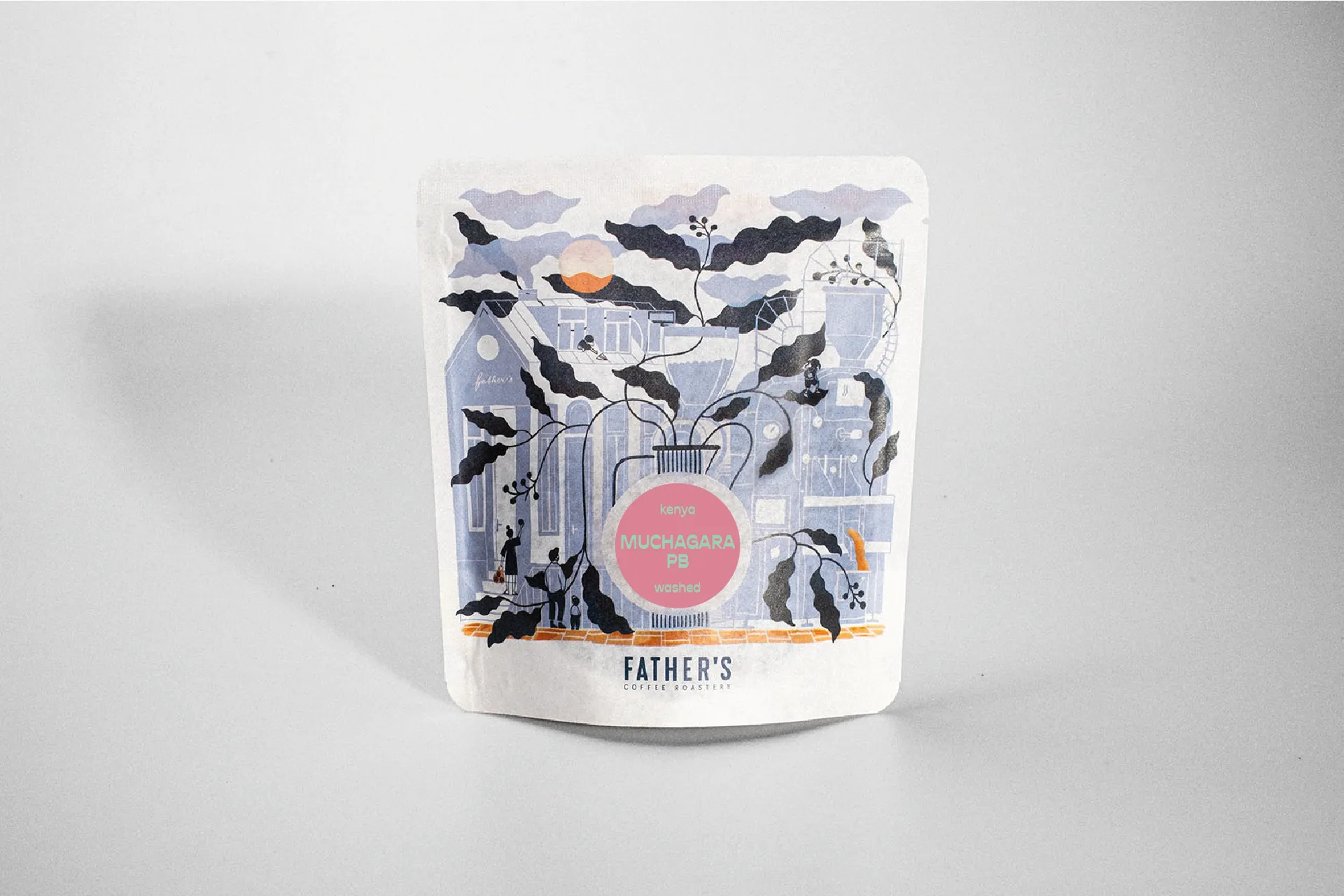
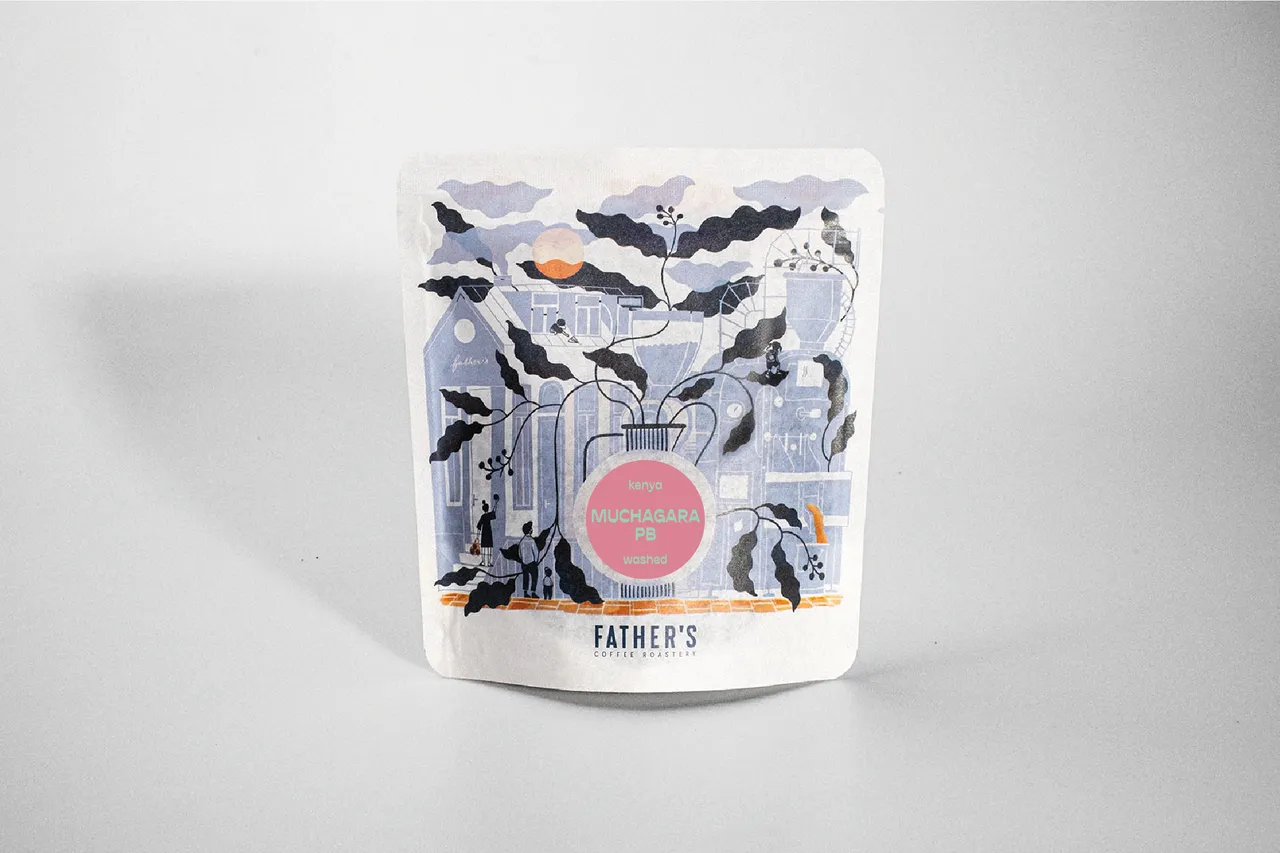
This Kenyan coffee comes from the Muchagara station in Kirinyaga County – an area on the slopes of Mount Kenya, considered one of the most renowned coffee regions on the continent. The SL28, SL34, and Ruiru 11 varieties, processed using the washed method, are ideal for filter brewing, with a profile led by notes of rhubarb pie with strawberries and lime.
Suitable for all filter-brewing methods (V60, Solo Dripper, Aeropress, Chemex, French press, Clever Dripper...).
Muchagara Factory is part of the Baragwi Farmers' Co-operative Society, one of the largest coffee cooperatives in Kenya. The cooperative brings together over 15,000 smallholder farmers and operates 12 washing stations. Muchagara itself works with approximately 1,700 farmers from the surrounding area.
The station is located in central Kenya, in Kirinyaga County, on the slopes of Mount Kenya at an altitude of 1,700 to 1,800 meters above sea level. The region lies between the eastern foothills of the Aberdare range and the western slopes of Mount Kenya, crossed by numerous rivers, and its soils have long been associated with strong coffee potential. Higher altitude and cooler night temperatures slow cherry ripening, resulting in denser beans with greater complexity.
PB in the name stands for Peaberry – coffee from cherries in which only one bean develops instead of two. Peaberry beans are rounder, denser, and behave slightly differently in brewing than standard flat beans.
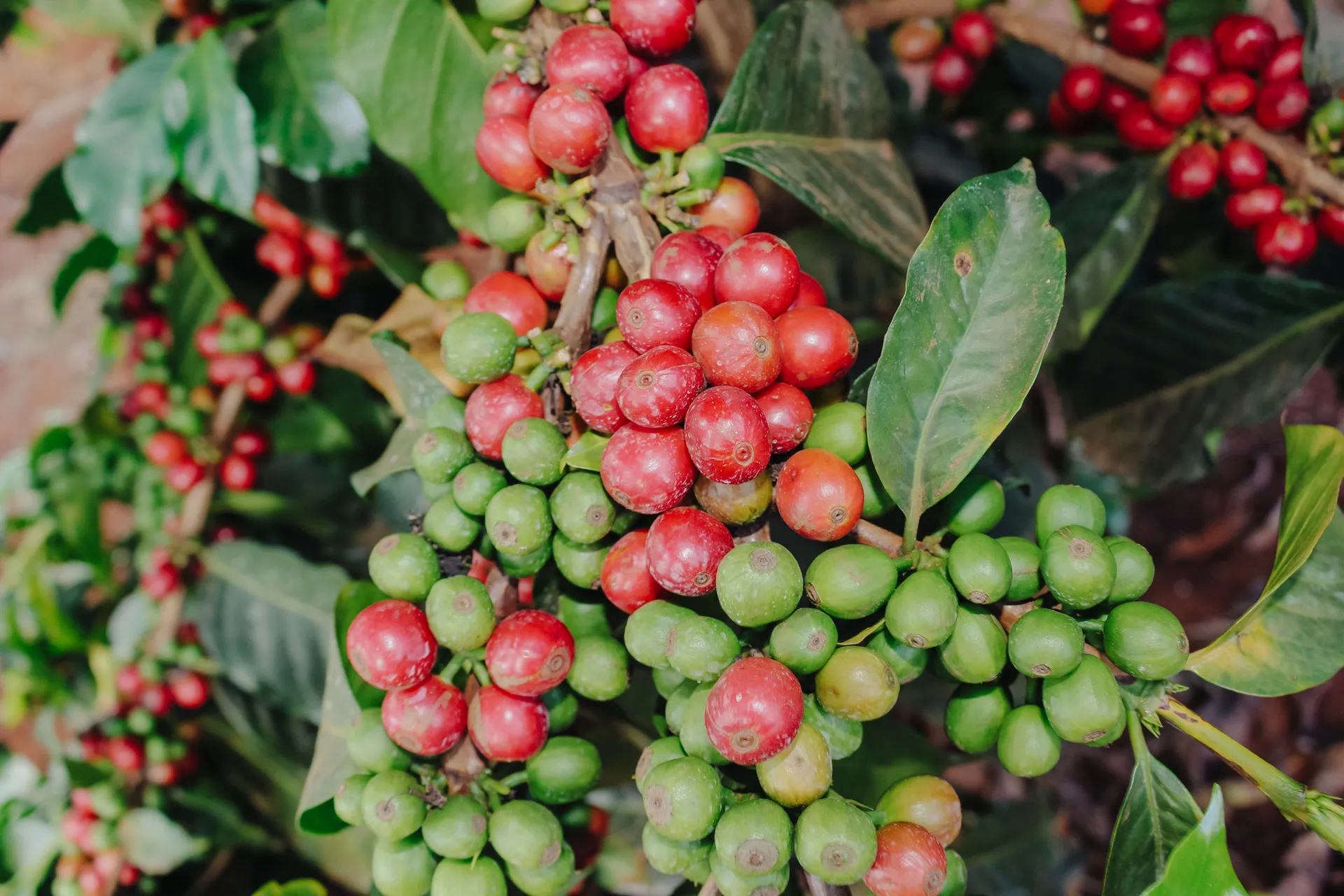
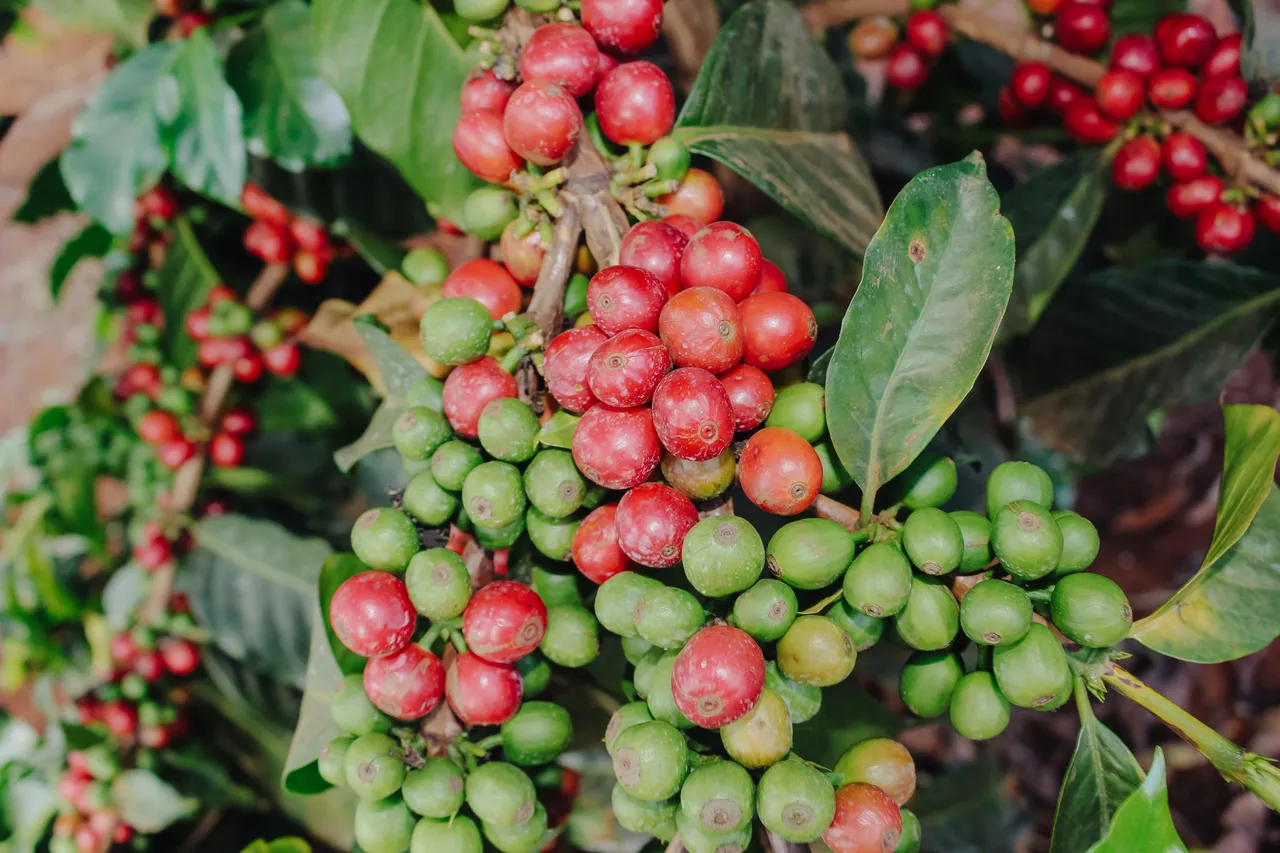
1. Harvesting and sorting Ripe cherries are hand-picked and immediately delivered to the station for processing.
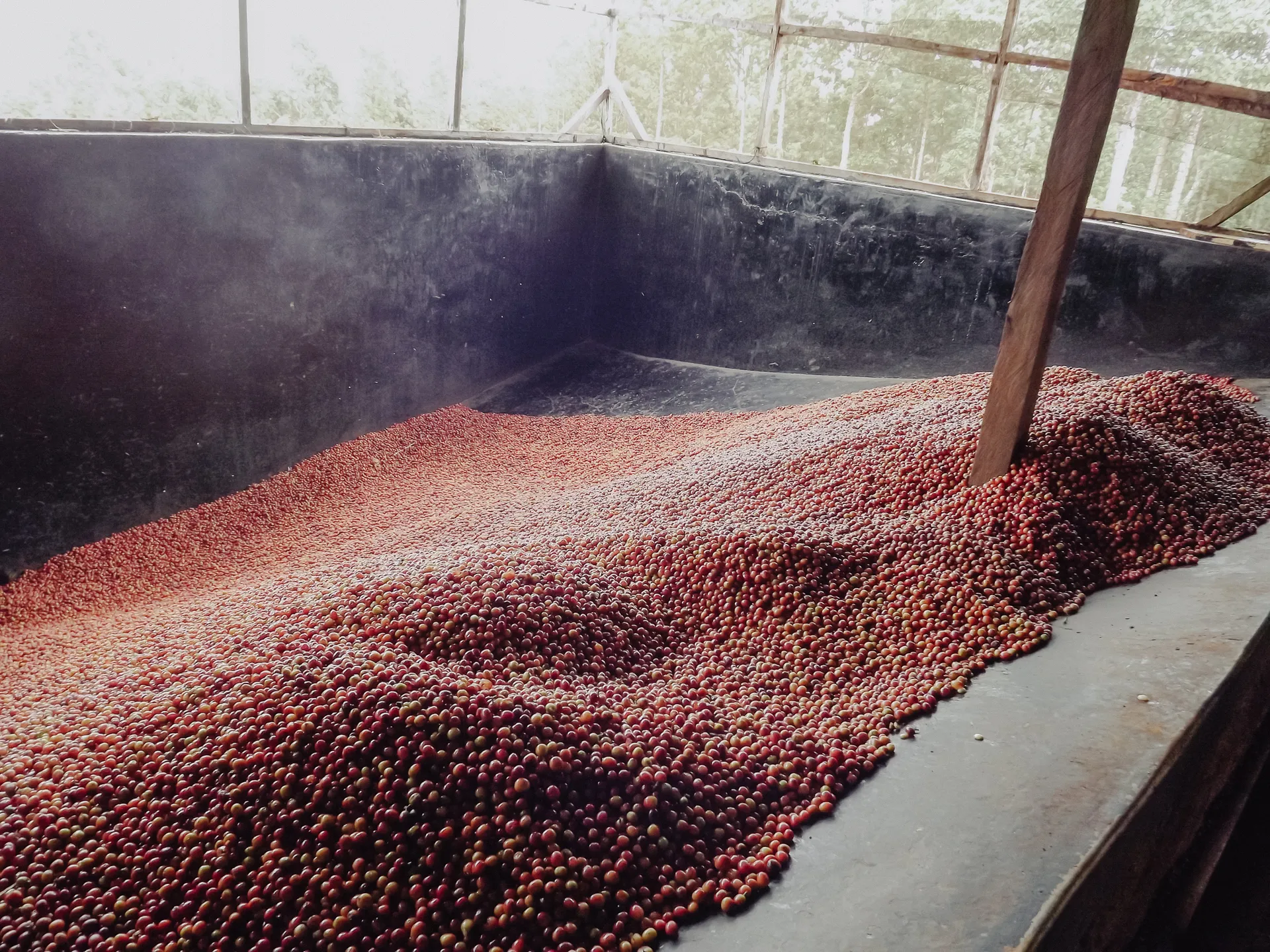
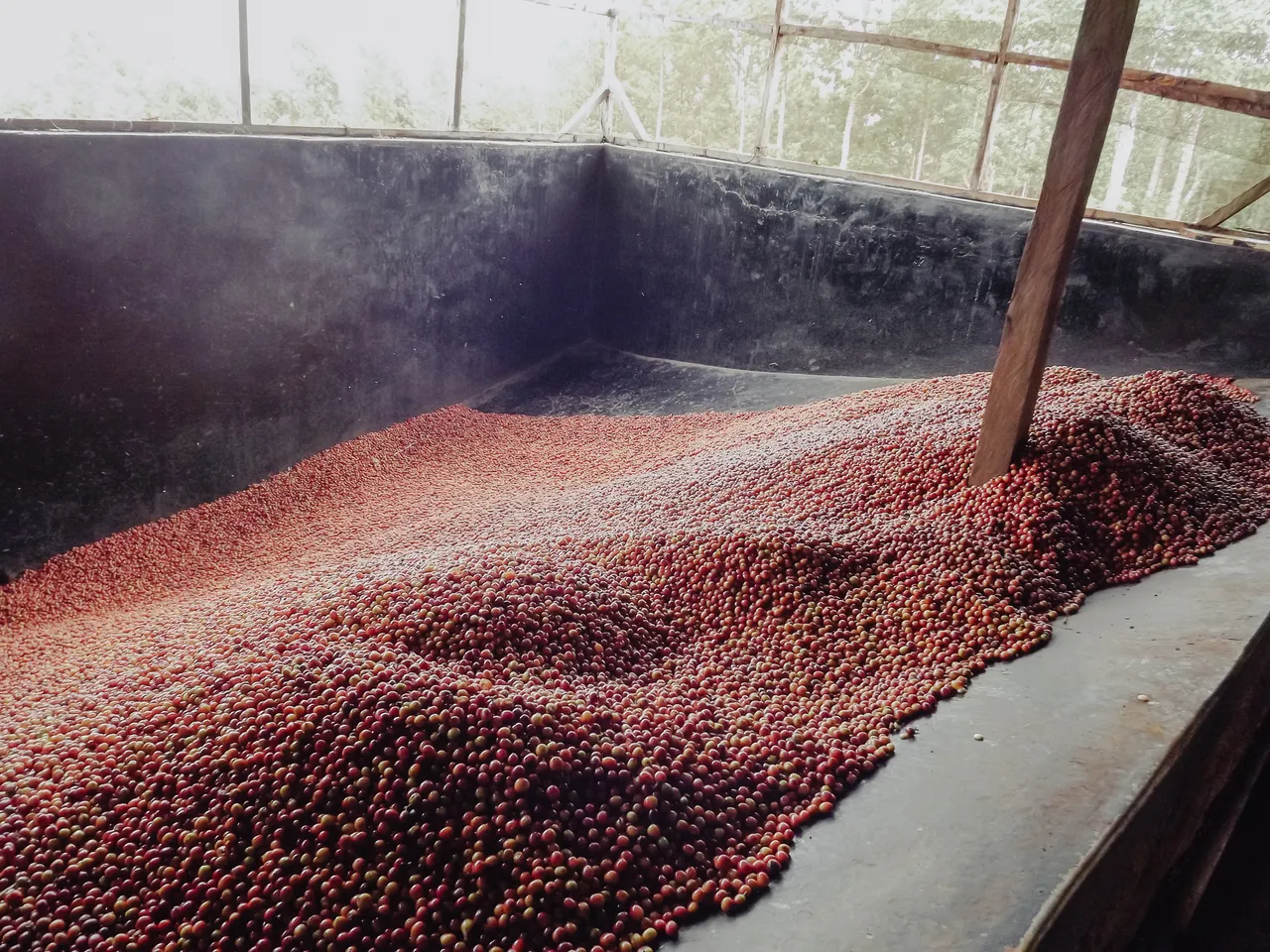
2. Depulping and fermentation The cherries are mechanically depulped to remove the skin and pulp. They then ferment for approximately 12 to 48 hours – depending on current climatic conditions.
3. Washing and soaking After fermentation, the coffee is washed in grading channels using fresh river water. This is followed by a soaking stage under water for another 12 to 72 hours. This step helps stabilize moisture and contributes to a clean cup profile.
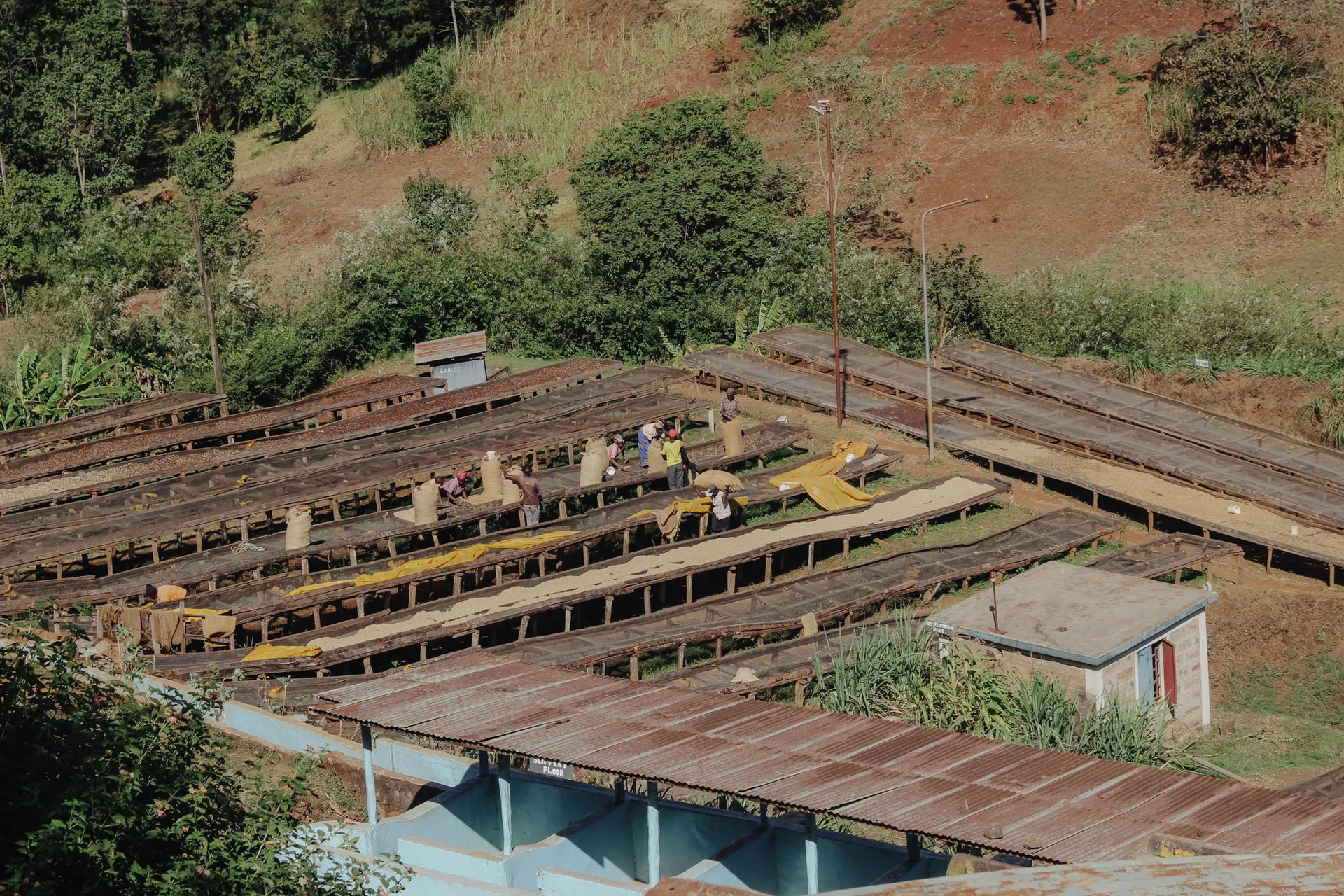
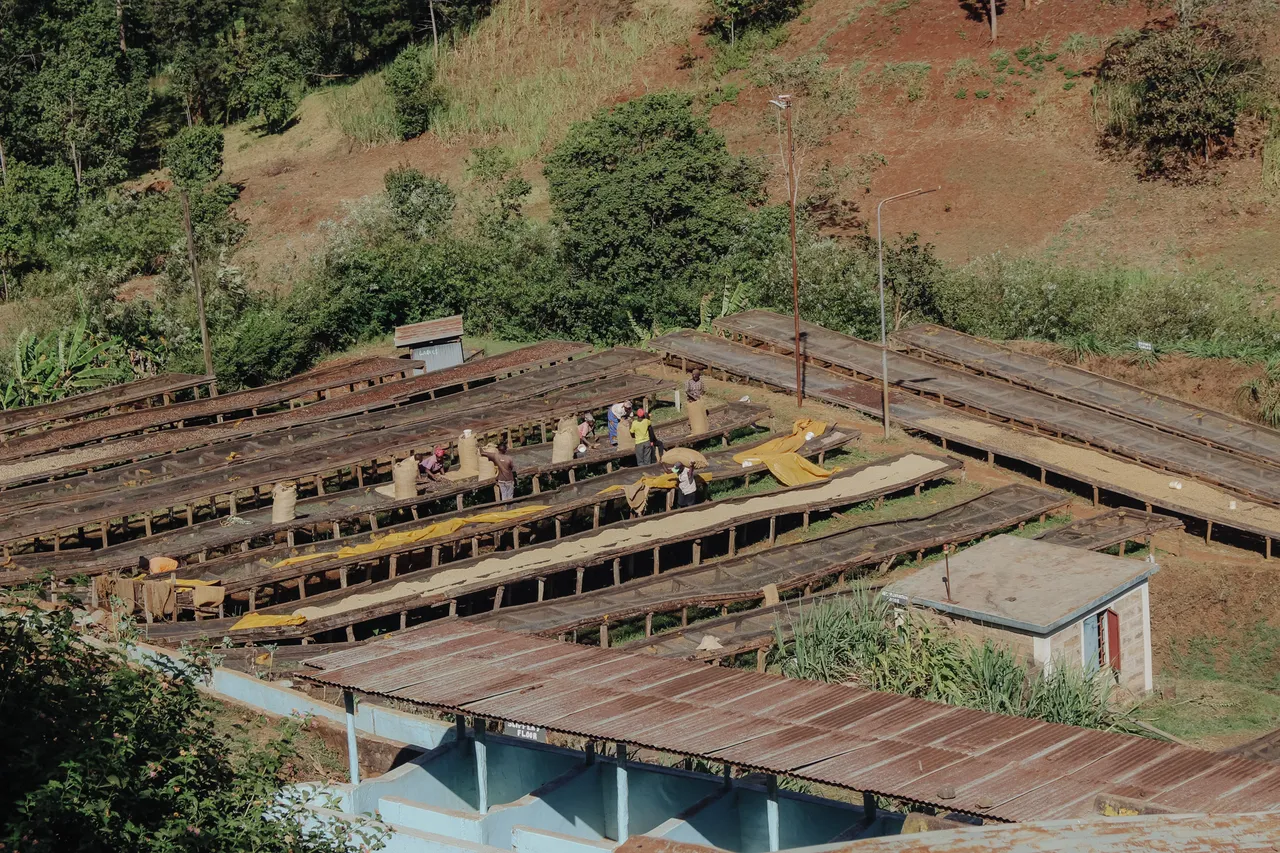
4. Drying The coffee dries slowly on raised beds for about two to three weeks, until moisture drops to 10–12%. Slow drying is key for Kenyan washed coffees to preserve clarity and brightness.
5. Resting and grading After drying, the coffee is moved to the mill, where it rests in parchment (the protective layer around the bean). It is then hulled, cleaned, and sorted by bean size. The final step is hand-sorting before preparation for export via Mombasa.
The washed method means that all pulp is removed from the cherry before drying. The flavor profile therefore directly reflects the character of the bean itself – resulting in clean fruitiness and the bright acidity that Kenyan coffees are known for.
SL28 and SL34 are Kenyan varieties developed in the 1930s by the Scott Laboratories research station – hence the SL abbreviation. They are known for vibrant acidity and a fruit-forward character; at higher altitudes they develop a fuller body and a more complex profile. Ruiru 11 is a newer Kenyan variety bred with an emphasis on disease resistance. In blends with SL varieties, it helps stabilize harvests without significantly changing the flavor profile.